

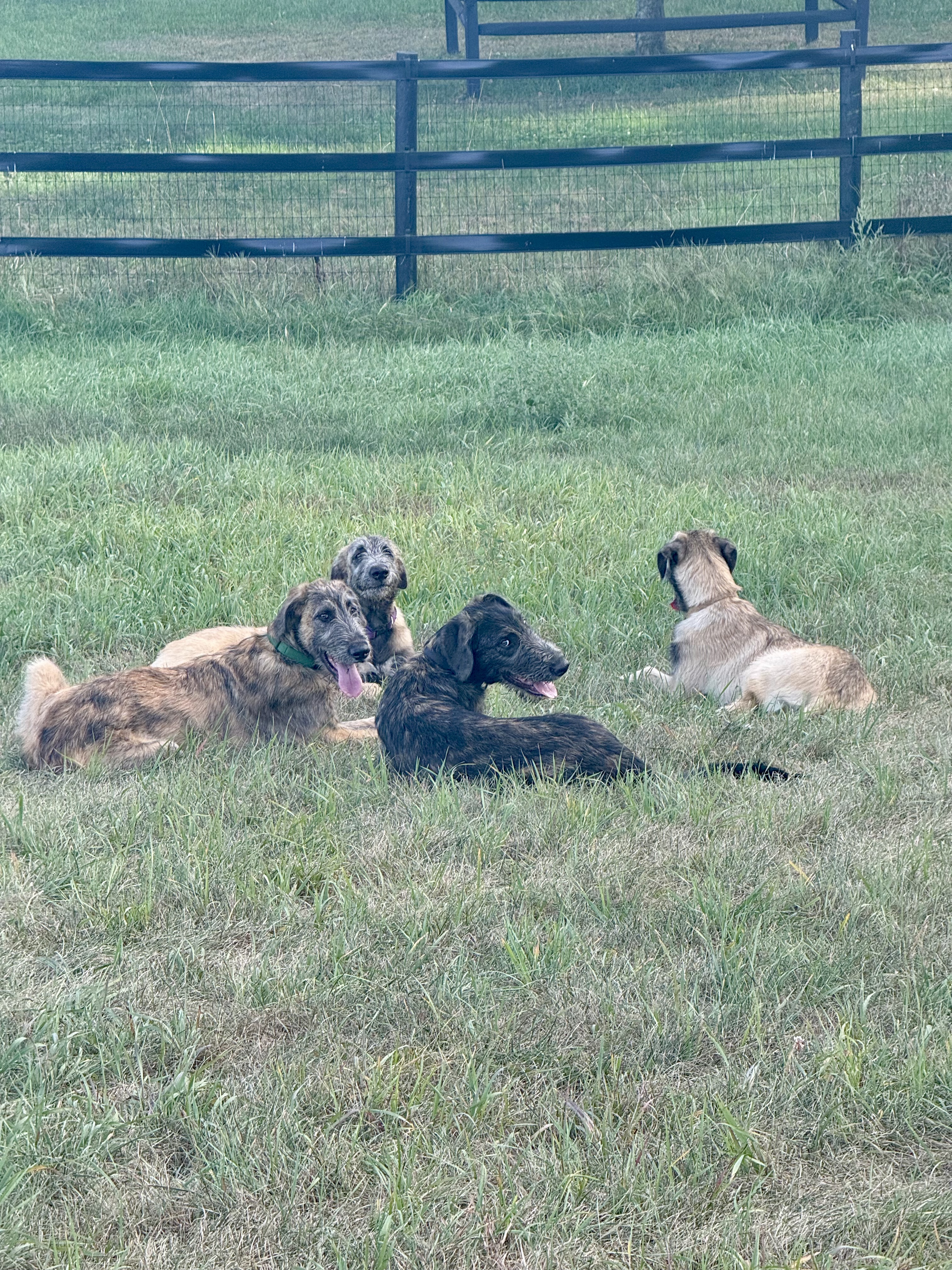
Finding a property that genuinely works for a serious dog breeding operation, a licensed kennel, or a multi-dog household is one of the most specific and underserved real estate needs in the market — and one that almost no agent is equipped to address with real depth. I'm Lisa Dubé Forman, a licensed real estate broker with over 30 years of experience, now focused on the Saratoga Springs area and the surrounding region. I have been an AKC Conformation Judge for decades and a dedicated breeder and exhibitor of Irish Wolfhounds and Australian Terriers for forty years. When I evaluate a property for a serious dog person, I am not reading from a checklist — I am drawing on a lifetime of knowing exactly what works and what does not. This guide covers everything a breeder, kennel operator, or multi-dog household needs to understand before beginning a property search in upstate New York.
Why Upstate New York — and the Saratoga Region Specifically — Works for Dog People
The Saratoga Springs region offers a combination that is genuinely rare in the Northeast — meaningful acreage at reasonable price points, agricultural zoning that accommodates animal operations in many towns, a strong veterinary and animal services community, and proximity to a vibrant small city with world-class culture and amenities. For serious dog breeders and kennel operators who have been searching in more congested areas of the state or in suburban markets where zoning simply does not accommodate their needs, the rural corridors of Saratoga County, Washington County, and Warren County open up possibilities that are hard to find this close to a city of Saratoga Springs' quality.
The presence of the Saratoga Kennel Club, active AKC breed clubs throughout the Capital Region, strong ties to the equine and agricultural community, and established veterinary practices with expertise in both large and small animals make this area genuinely hospitable to serious animal enthusiasts in a way that few other upstate New York regions can match.
The Most Important Thing to Verify Before You Buy — Zoning
This is where most buyers make their most expensive mistake — falling in love with a property before verifying whether their intended use is actually permitted on it.
Kennels are not always permitted in particular zones because those zones are not appropriate for commercial uses, have noise restrictions, or restrict animal operations for other reasons. Very often kennel-related businesses are not allowed within residential neighborhoods and sometimes they are not permitted within city limits at all. Horizon Structures
In upstate New York the zoning picture varies significantly from town to town and even within towns. Agricultural zones — typically designated A1 or AG in most Saratoga and Washington County towns — generally permit kennel operations and breeding activities as of right or with a relatively straightforward special use permit. Residential zones of any density almost never permit commercial kennel operations and many have strict limits on the number of dogs permitted per household regardless of lot size.
Before making any offer on a property intended for a kennel or serious breeding operation, the first call to make is to the town or village zoning office to confirm specifically whether the intended use is permitted on that parcel. This is a five minute phone call that can save you from a very expensive mistake. I make this call on behalf of every client I represent in this niche before we ever submit an offer.
New York State Licensing Requirements
Beyond local zoning, New York State has its own licensing framework for kennel and breeding operations that every buyer needs to understand before making a purchase.
In New York, dog shelters and certain kennel operations must be licensed by the Department of Agriculture and Markets. This license is annual, and the renewal application must be submitted at least 30 days before the next license year. The license must be posted on the premises, and pre-license, annual, and potential unannounced inspections are required. The Dog Kennel Collection
The threshold for when state licensing is required depends on the number of dogs on the premises and the nature of the operation — breeding for sale, boarding, training, and rescue operations each have different regulatory triggers. If you are purchasing a property where a kennel operation was previously licensed, confirm with the Department of Agriculture and Markets whether that license transfers with the property or requires a new application under your ownership. It doesn't transfer automatically, and assuming it does can create a gap in your operating authority.
For buyers establishing a new breeding or boarding operation rather than purchasing an existing one, it is essential to build the licensing timeline into your purchase planning. Factor several months for inspection scheduling and licensing approval into your operational timeline before you expect to be fully up and running.
What to Look for in the Physical Property
My four decades of hands-on experience with large breeds and breeding operations directly inform what I evaluate in every property I show to dog-focused buyers. The things that matter most are not always the things listing photos show.
Acreage and fencing configuration matter enormously. Adequate space for exercise runs, whelping areas, and outdoor time separated by sex and litter is a baseline requirement for any serious breeding program. Existing fencing is valuable, but its quality and configuration matter as much as its presence — perimeter fencing appropriate for Irish Wolfhounds is a very different specification than fencing adequate for terriers, and I evaluate this specifically for each client's breeds.
Water supply is critical and consistently underestimated. A household well that adequately serves a family of four may be completely insufficient for a kennel operation with multiple dogs, regular bathing, cleaning, and whelping needs. Request a well yield test — not just a water quality test — and verify that the flow rate supports your intended operation before closing.
Outbuilding configuration and condition determine whether you can operate from day one or must make significant capital investments immediately after purchase. A sound barn or purpose-built kennel structure with proper ventilation, heating, drainage, and electrical capacity is worth far more to a serious breeder than a beautiful farmhouse with inadequate outbuildings.
Neighbor proximity and prevailing winds are practical considerations that many buyers overlook until after they have moved in. Barking carries. Even the most responsibly managed breeding operation will generate noise that nearby neighbors will notice. Properties with natural buffers — treelines, topographic separation, meaningful setbacks from adjacent parcels — are meaningfully more sustainable for long-term operations than properties where the nearest neighbor is two hundred feet away.
An indoor whelping space with reliable heat, proper ventilation, and easy-to-clean surfaces is non-negotiable for serious breeding programs in upstate New York's climate. Whelping in an unheated outbuilding in Saratoga County in January is not a viable option for large breed litters. I would look specifically at this infrastructure in every property I show to breeding clients.
The Multi-Dog Household That Is Not a Commercial Operation
Not every buyer with a large number of dogs is running a commercial operation — many are simply dedicated fanciers, exhibitors, or retired breeders who need a property that accommodates their lifestyle without triggering commercial zoning requirements.
This is actually a more nuanced situation than it might appear. Many upstate New York towns have local ordinances limiting the number of dogs permitted per household, regardless of whether any commercial activity is occurring. These limits vary — some towns permit four dogs, some six, some have no household limit in agricultural zones. Verifying the specific limit in the municipality you are considering is essential before purchasing if you have more dogs than the typical household.
Properties in agricultural zones with meaningful acreage almost always offer the most flexibility for multi-dog households, both in the regulatory environment and in the practical reality of managing multiple dogs comfortably. The right property for a household with eight dogs is simply different from the right one for a household with two.
Finding the Right Veterinary Support
This consideration rarely appears in real estate guides but matters enormously to serious dog people. The Saratoga Springs and Ballston Spa area is genuinely well served on this front — the region offers strong veterinary support across both small- and large-animal practices and, importantly, includes excellent reproductive medicine services that serious breeders depend on. For many buyers relocating from other parts of the state, this is a genuine and welcome surprise — reproductive veterinary expertise of this caliber is not available in most comparable small city markets.
Specialty services such as ophthalmology, orthopedic surgery, and dermatology may require travel to Albany or the broader Capital Region, depending on the specific need, but the reproductive medicine foundation that breeding programs rely on most critically is right here in the local market. This is one of the practical advantages of the Saratoga Springs region for serious breeders that I discuss with every breeding client during our initial property consultation — and it is another reason this area makes genuine operational sense for a serious breeding program, not just a lifestyle choice.
A Note on Properties with Existing Kennel Infrastructure
Properties in the Saratoga region that already have purpose-built kennel runs, whelping facilities, or established dog-related infrastructure occasionally come to market, and when they do, they move quickly among the small audience that recognizes their value. These properties command a premium that is fully justified for buyers who would otherwise need to build that infrastructure from scratch — construction costs for proper kennel facilities are substantial, and the timeline from purchase to operational readiness can stretch considerably if you are building new.
I maintain awareness of properties with this kind of specialized infrastructure and can notify buyers on my list when something matching their criteria becomes available. If you are specifically looking for an existing kennel property rather than building new, reach out and let me know your criteria — this is a niche where the right property may not be widely advertised.
Ready to Find the Right Property for Your Dogs
This is genuinely one of my favorite conversations to have with clients because it draws on both sides of my professional life simultaneously. Whether you are a serious breeder, a kennel operator, an AKC exhibitor, or simply someone with a lot of dogs who needs a property that truly accommodates your life with them, I understand exactly what you are looking for in a way that most agents cannot.
Reach me directly through the contact form on this site or visit my Saratoga Springs community guide to learn more about the region. Let's find the right property for you and your dogs.
